
Tags
#Agile, #AgileSoftwareDevelopment, #AgileTraining, #Dailyscrum, #Grooming, #Groomingsessions, #Kanban, #LatestInAgile, #Lean, #Nirbhay, #NirbhayGandhi, #Planningmeeting, #S2, #S3, #Scrum, #Scrummeetings, #Scrumofscrums, #ScrumPlanning, #Scrumrituals, #SoftwareDevelopment, #Sprintdemo, #SprintRetrospection
Hello All, how was the turkey feast? and the shopping experience? I had a great time with friends and family, we did Turducken this time, it was truly AMAZING! And, then the midnight shopping extravaganza, I just love this entire Holiday season.
Alright, its time to come out of the Thanksgiving Hangover, and back into reality! Do you remember what we discussed in the last article? In case you don’t, there is nothing to worry about. A picture is worth a thousand words, right? 😉
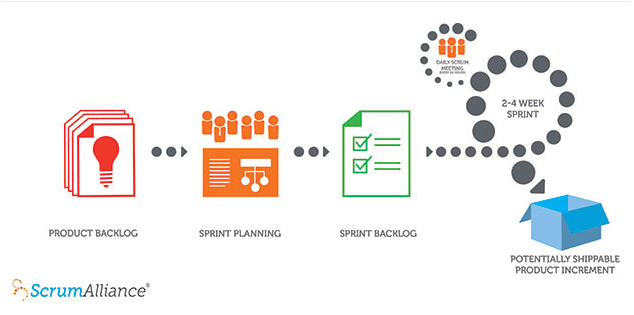
Scrum in a nutshell
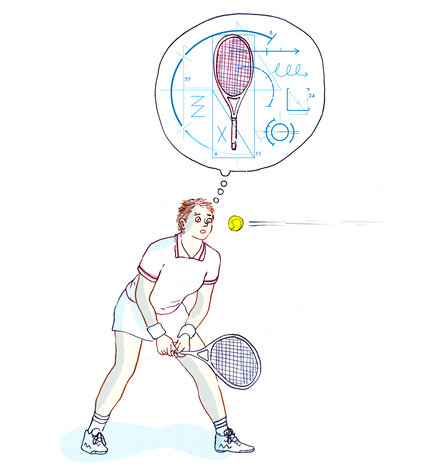
So in my last article, we learnt how Scrum works in theory, however, I doubt if it will be enough for you to go out and start implementing Scrum in your organization.
Practical vs. Theory
Only the real world examples can help us understand how the real world scrum differs from its ‘by the book’ version. I can tell you from my own experience of working, preaching, and advocating scrum for last several years that in the real world its not only different from its ‘by the book’ version but also differs in how its implemented in each organization. Well, that doesn’t mean that these organizations are not following Scrum, the foundation is still the same, however, each organization has customized and created a version of Scrum that suits their needs the best, or we can say that they have added their own flavor to it. End of the day its just a process to help you develop a better product faster, so do whatever works best for you. 🙂
Scrum Rituals’ Variations
There is not much change in the overall approach for Sprint Planning, Daily Stand-Up, Sprint Demo and Retro, the main essence of each of these meetings still remains the same. However, the scrum practices followed in each organization differ vastly, and this can be attributed to several factors such as, organizational maturity in terms of Agile and Scrum adoption, industry type, nature of product being developed, market need, organizational culture, and geographical location. Infact, in cases of large organization the practices differ from department to department and at times even team to team. Never-the-less they all still follow the basic foundational Scrum practices – Sprint Planning, daily stand-up, demo, and retro. What differs though, is the style of running, facilitating and organizing these rituals.
There are some common additions also to the list of these rituals – Grooming Sessions, Scrum of Scrums (S2) and at times even Scrum of Scrums of Scrums (S3) depending on the organization’s hierarchical complexity.
We have already covered briefly the basic scrum rituals in my last article. Let us now dive into each of these additional rituals one by one.
Backlog Grooming
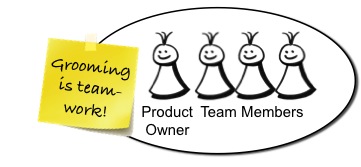
Grooming Sessions are a substitute for the Sprint Planning I session. They eliminate the need for an all day planning meeting and depending on the team’s maturity level, planning sessions can just be used for having a final review and confirming the team’s commitments for the sprint. I have had teams who were so thorough and mature, that planning meetings were literally in and out in no time, they lasted anything between 30-45 minutes. The team walks in into a room, check their already well groomed backlog, a quick view into the task breakdowns, a formal commitment to the PO and DONE!
How did they make this magic happen? The magic answer is “Do your HOMEWORK right”.
Allow me to share a real life example of one of my teams who were in a two week sprint schedule. I will walk you through their Day 1 to Day 10 schedule for Sprint X and for confidentiality purposes I will be using fictitious names, if any.
Day 1: Planning Meeting | 1 hour – short and crisp, review of stories in the Sprint X backlog, review of tasks under each of the stories, capacity planning, and communicate commitments to the PO
Day 2 – 10: Daily Stand-Up | 15 minutes – Updates on day ‘n-1’ tasks (completed or not), plan for day ‘n’ and discussion on impediments, if any.
Day 4: Grooming I | 1 hour – PO and/or BSA walk the team through the product backlog (features / user stories), create new stories if need be, define the stories to have a proper description and acceptance criterion, define a high level development and testing approaches. If time permits, the team will size the stories as well.
Day 9: Grooming II | 1 hour – By this time team has already reviewed the stories offline, added their tasks and estimated them as well. The PO and/or BSA will address any open questions from the team, the team will review each others’ tasks and estimates. Based on skill sets and maturity, they evenly distribute the tasks between themselves. At this point, the discussion is primarily about the detailed development and testing approach, identifying any cross-dependencies and risks and calling them out, and dropping them into the Sprint X+1 backlog.
Day 10: Sprint Demo | 30 minutes – The team demonstrates their work accomplished in Sprint X to the PO and all other stakeholders, get their feedback and acceptance on user stories, wherever applicable, and close the sprint.
Day 10: Sprint Retrospection | 1 hour – The team gets together along with the Scrum Master in a room and go over the events, achievements, short comings in Sprint X. Identify ‘What went well?’ items and celebrate their successes. Identify ‘What did not go that well?’ items and pick the top three items that the team will like to improve upon in Sprint X+1.
And guess what, this is just one team I am quoting here. Every team I have worked with had a different style, different perspective, different comfort zone, different… most of the things… Yet they all were/are following Scrum framework for software development.
S2s and S3s
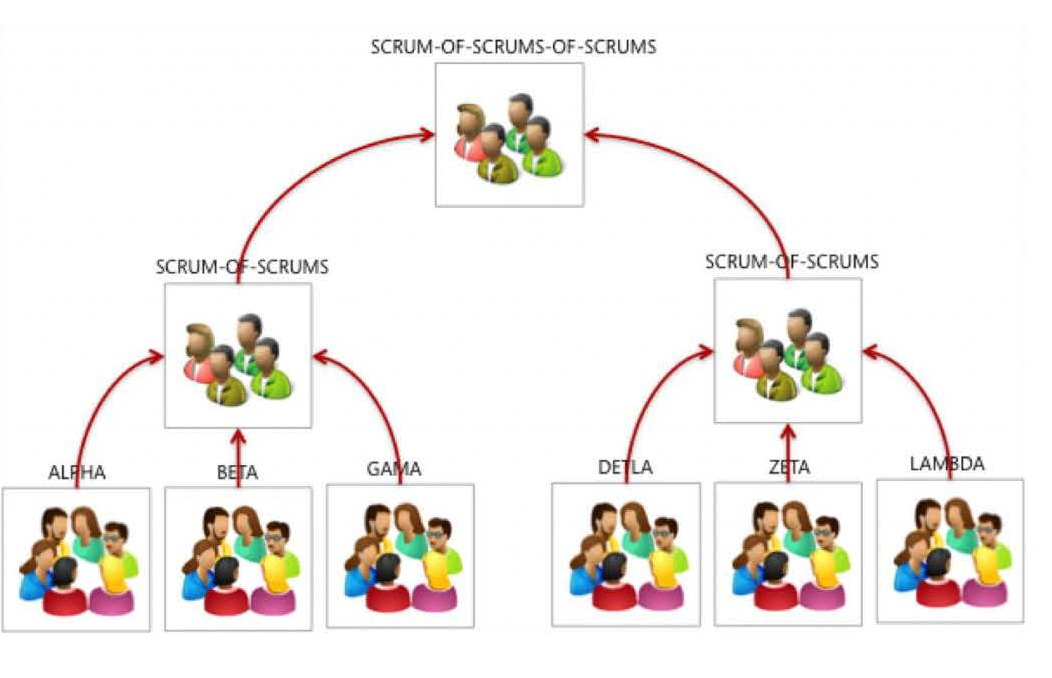
Scrum of Scrums (S2) is a daily stand-up for Scrum Masters. It doesn’t necessarily have to be daily, it can be twice or thrice a week or even just once a week. In relatively big organizations there generally are multiple portfolios and programs and projects, with numerous teams and multiple scrum masters. This kind of size and complexity calls for a little organization within the Agile/Scrum group. Scrum of Scrums (S2) is a platform where all the scrum masters and coaches get together to discuss their success and pain-points, share each others experiences, discuss best agile/scrum practices, discuss cross-dependencies, identify project / program / portfolio level risks and notify the leadership accordingly. The duration of this meeting, based on the frequency of occurrence and the agenda, can vary from 15 to 30 minutes to 1 hour.
Scrum of Scrums of Scrums (S3) is not that widely adopted a practice as S2, however, the intent is similar to S2. The only difference is that the participating audience changes. Instead of all scrum masters, it is just agile coaches and leadership team (and may be few selective scrum masters, depending on the need and situation) get together to discuss the high level pain-points, escalations, high impact risks, overall status and health of the program/portfolio. The frequency and duration of this session can again vary for the same reasons as S2. This session is generally needed in organizations with more complex hierarchical structure.
And now, I am thinking of inventing a new session called S4 – Scrum of Scrums of Scrums of Scrums. I’m just kidding, I really doubt if there will ever be a need for such a session as S3 already serves the purpose.
So, I believe this article helped you broaden your knowledge of Scrum a little more. In our next article we will discuss more about the Sizing and Estimation techniques. Happy Reading!
– Nirbhay Gandhi


Good one Nirbhay! Important pointers are presented in a story manner, which is commendable! Way to go!
LikeLiked by 1 person
Pingback: Did you do your HOMEWORK RIGHT? | Nirbhay Gandhi
Pingback: Lessons from the PAST… | Nirbhay Gandhi