
Tags
#Agile, #AgileSoftwareDevelopment, #AgileTraining, #Kanban, #LatestInAgile, #Lean, #Nirbhay, #NirbhayGandhi, #PlanningPoker, #planningpoker.com, #Scrum, #Sizing, #SizingTechniques, #SoftwareDevelopment, #StorySize, #T-ShirtSizing, #UserStory, #VersionOne
Hello again, how is everyone doing? Probably packing up bags and getting ready for vacations, right? 🙂 While on your flight to your holiday destination, while listening to your favorite holiday music, give this article a read, and you will feel proud of yourself, for you learnt about an important piece of agile while vacationing. What a productive vacation!! 😉
In our last article we covered What, Why and Who of sizing, this one focuses on just the HOW part of it. How do we size OR what scale (techniques) to use for sizing the user stories?

How to size?
Each organization has their own ways and techniques for story sizing and, though very rare but at times, teams within a single organization may use different techniques for sizing. Few of the most common and popular techniques used are Planning Poker, T-Shirt sizes, and Relative Mass Valuation, however, you can use any technique that works best for your team. In my experience I have had teams who used Seven wonders of the world, Dog Sizes and breeds, Shoe sizes, Planet sizes. It really doesn’t matter what sizing technique you use, end of the day the stories have to be sized using some kind of scale and it is anyway relative sizing.
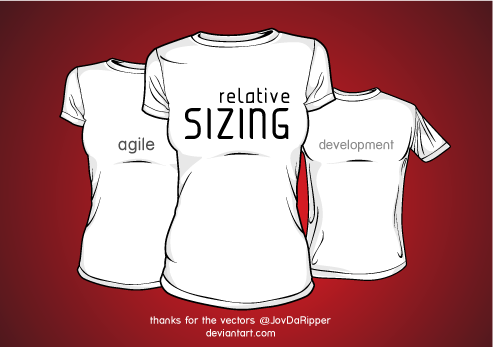
Relative Sizing
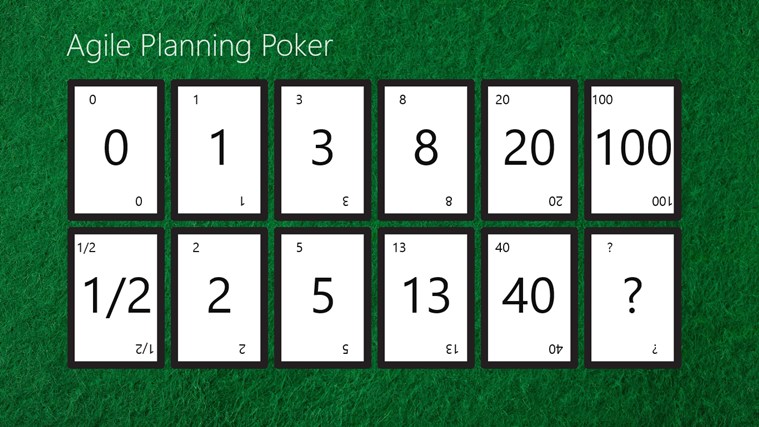
Planning Poker Set
Planning Poker is one of the most popular sizing technique. If you and your team likes poker arrangement, poker cards can be a fun thing to use. Each team member is given a set of poker cards, but not from a real poker deck. 😉 The deck has four sets, and each set includes, ???, 0, 1/2, 1, 2, 3, 5, 8, 13, 20, 40, 100. The story is read out aloud or displayed on a screen. Each team member pulls out a card for what they think about the story. If the estimates are all over the map, the team members with the lowest and highest votes explain their rational behind their votes. POs, SMEs and Architects can contribute their thoughts on the complexities involved, and help the team be more educated about the story. At this point we can either re-vote and get a consensus on the size for the story.
And my personal favorite is the web version of planning poker – planningpoker.com for the reason that it allows me to work very effectively with distributed teams and not to forget the ease of the system.
A few of the agile tools are integrating planning poker (or similar sizing techniques) in the tool itself, such as Version One (launched recently in their beta version).
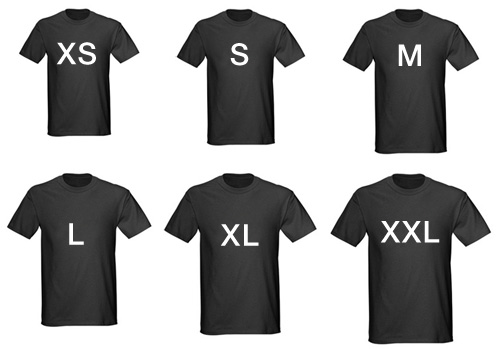
T-Shirt Sizes
T-Shirt Size is another popular technique used by teams who don’t enjoy playing with numbers that much. So when the teams tend to over analyze the numbers, T-Shirt sizes come in handy, as T-shirt sizes are easier to relate to.
If the team members are relating story sizes to number of hours involved in delivering the value of the story, or vice-versa, I believe it is time for the Scrum Master to pitch-in T-Shirt sizes as the sizing technique. T-shirt sizes allow the team members to think in a more abstract way about the effort involved in a story.
Although this method of sizing is more fun and entertaining, it has some dis-advantages as well, such as,
- non-numerical scales are less granular,
- less accurate velocity estimates,
- lacks mathematical relationship between two stories,
- difficult to roll up to feature and epics’ estimates,
And for the reasons above, T-shirt sizes can be more effective for the teams that are just starting out with agile, however, it is more beneficial for them to move to the number system as they mature.
While the teams using T-shirt sizes mature to be able to use numbers effectively, the Scrum Master can use a translation / conversion for T-shirt sizes to Numbered story sizes – XS = 2, S = 3, M = 5, L = 8, XL = 13. And this translation can be adjusted or defined differently in different organizations, however, I hope this helps you understand the concept.
Instead of T-shirts, teams can also use, dog sizes and breeds or 7 wonders of the world or planet sizes or shoe sizes or anything for that matter.

7 Wonders of the World
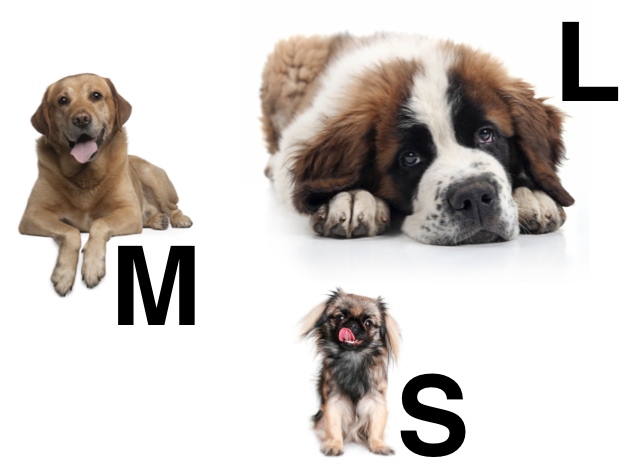
Dog Sizes

Planet Sizes
Relative Mass Evaluation is quite an interesting technique to be used when we are dealing with a large backlog of stories that need to be sized all at once. If I ask you to size, say 100 stories, living in our backlog, I am sure it will appear as a very daunting task to you. In such situations, we use Relative Mass Evaluation technique. All you need to do is, have all the stories written on story cards, set up a large table on which these cards can be moved around easily relative to each other. Pick any one story to start with, evaluate if it is a small, medium or large, and place it accordingly on the table. And then every other story can be assessed for if it is less or more complicated than the one we just put down. Position the story cards on the table relative to the previous card, and go to the next card. Once the card arrangement is complete, we can assign points to these stories based on the position of the story on the table – starting from one end, calling these stories 1 and moving towards the other end, assigning a higher number as we go, 2 to 3 to 5 and so on and so forth. Keep in mind though that the teams should not get hung up on the fine details of the stories, the idea is just to get a rough point estimate, not a precise order.
The biggest advantage of using this process is that we can easily size 100 or more stories within an hour or less. Another advantage to this technique is that it helps the team get a sense of accomplishment that they got a lot done in such a less time.
So I guess, now you all have a fair amount of idea about the different sizing techniques you can use in your organization. Allow me to end this article with a nice thought…
“Even when you know NOTHING, you know SOMETHING”.
Happy Reading! 🙂
– Nirbhay Gandhi
 Nirbhay Gandhi
Pingback: What’s the PLAN? | Nirbhay Gandhi
Everything is so elaborative and informative that it gives a clear clarification about different approaches used by organizations . Your blog is very useful. Thanks for sharing!
LikeLiked by 1 person
@shuchtandon, good to hear that you found the articles descriptive and informative.
LikeLike